EARTHQUAKES AND VOLCANOS
Oceanic-Oceanic - M 4.6 - Izu Islands, Japan Region - 10/19/2011 - 12:03:06 - 15.41 miles deep - This earthquake occured in a subduction plate zone, near an obvious underwater cliff. | 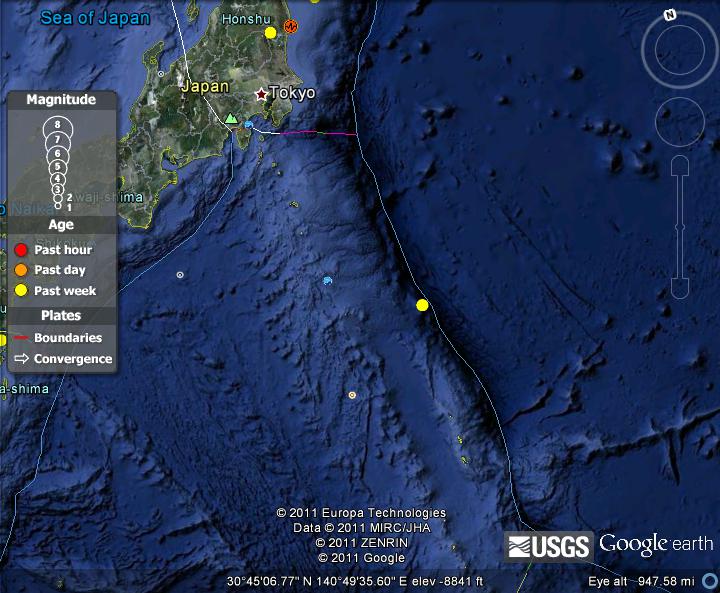 |
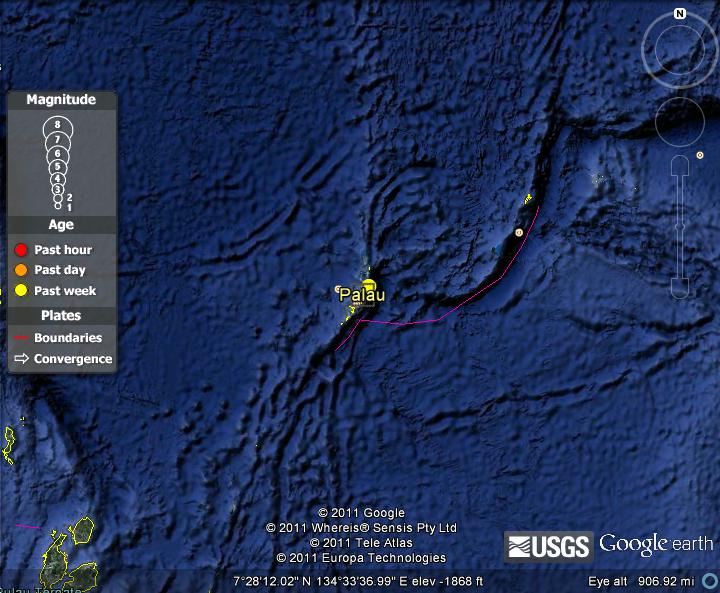 | Oceanic-Continental - M 5.3 - Palau Region - 10/23/2011 - 03:26:30 - 36.60 miles deep - This earthquake occured where previous volcanic activity has created a chain of islands.
|
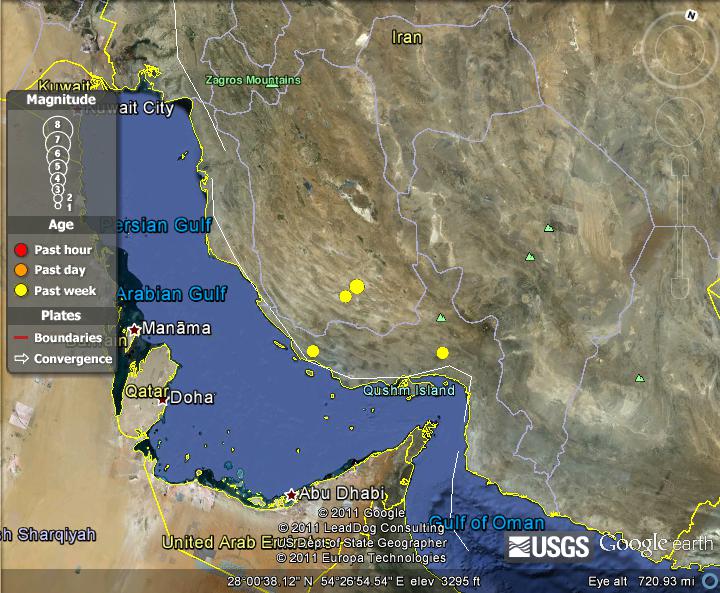
Continental-Continental - M 4.5 - Southern Iran - 10/19/2011 - 00:58:07 - 24.17 miles deep - Common earthquakes, near a mountain chain (Zagros mountains)
|  |
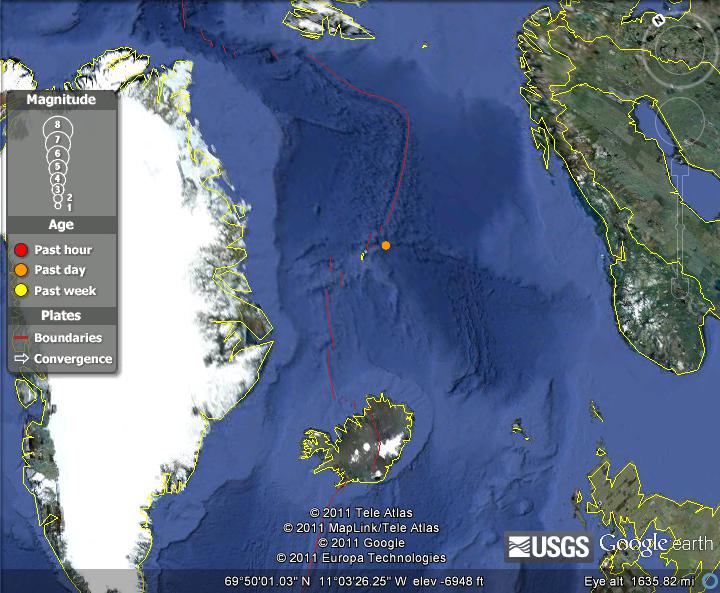 | Divergent - M 5.0 - Jan Mayen Island Region - 10/25/2011 - 02:32:22 - 10.31 miles deep - Mid Ocean Ridge is apparent.
|
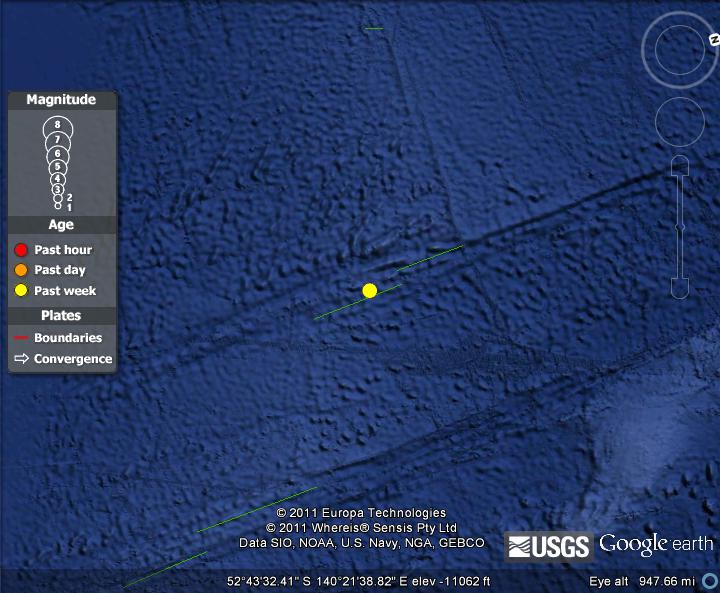
Transform - M 5.2 - West of Macquarie Island - 10/20/2011 - 16:07:23 - 6.40 miles deep - No volcanoes, no major topography.
|  |
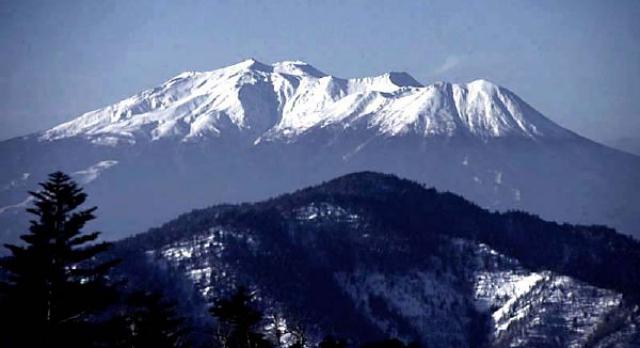 | Composite Volcano - On-Take - Composite volcano/Complex volcano - Convergent: Continental-Continental
|
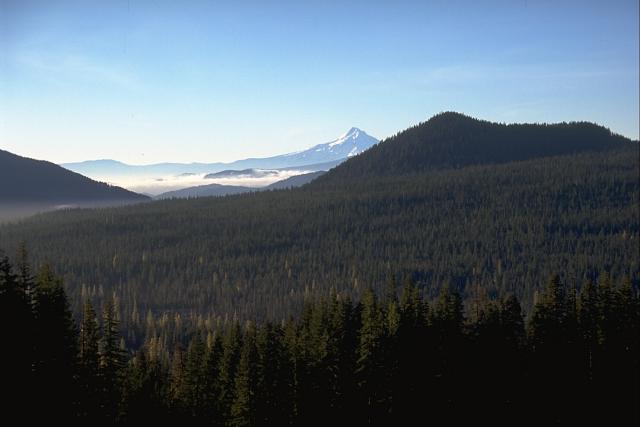
Shield Volcano - Indian Heaven - Shield Volcano - Subduction zone: Oceanic-Oceanic
|  |
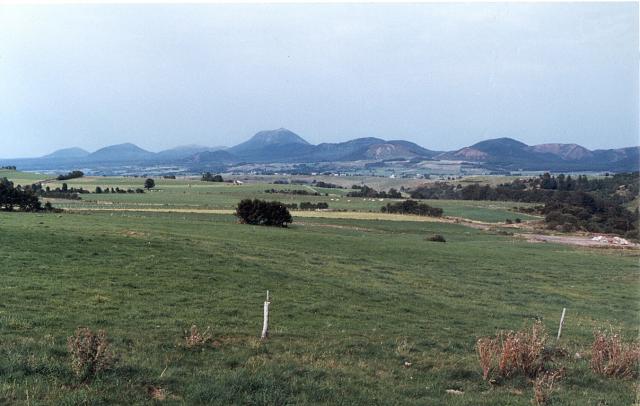 |
Cinder Cone - Chaine Des Puys - Cinder Cones, Lava Domes, Maars - Not near a fault line
|
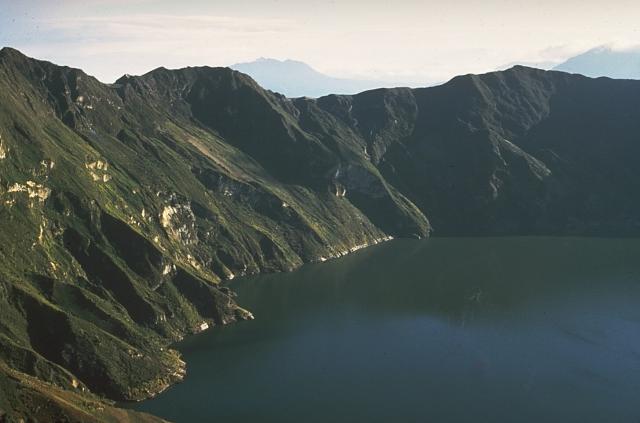
Caldera - Quilotoa - Caldera - Convergent: Continental-Continental
|  |
Assignment Reflection
1. Describe the correlations between earthquakes and volcanos in terms of the theory of plate tectonics.
The theory of plate tectonics touches upon the different possibilities behind what drives the plates to move. While there is no way to prove what moves the plates, thereby creating earthquakes and pushing molten lava from below the earth's surface through the volcanos, it is suggested that the movement of the magma below the plates may influnce the movement. Also, there is evidence that the subduction zones, where old, dense plate sinks under lighter plates, may cause the majority of the movement of tectonic plates.
Plate movement causes both volcanic activity and earthquakes. The majority of land volcano eruptions are caused by pent up gases that cannot escape through the molten rock above it. This pent up energy releases and creates a volcanic eruption. Earthquakes are caused by pent up energy between plates, which can be caused by several different type of plate boundaries and movements. Earthquakes are much more deadly that volcanos, mostly because their impact reaches farther with no warning, and they strike more often. Out of all the volcanos on land, only a handful are still active. Those that are can be deadly, but they erupt slowly and most people have enough warning to get out of harms way.
2. Analyze the spatial relationship and distribution that exists with these forces of nature.
The majority of these forces occur around the ring of fire, which is located around the Pacific Ocean. Japan, which is on the western side of the Pacific Ocean, is a prime example of how location near a plate boundary can cause numerous types of natural disasters to occur. Almost every island is created through volcanic activity, so the likelihood of finding a volcano near there is very high. The parts of the world famous for their mountainous terrain are also those that are affected by earthquakes. Each part of the world has a major risk, whether it is flooding, drought, earthquakes, volcanos, tornados, hurricanes or fire. Learning to live in the environment and handle the deck of cards we have been dealt is a prime example of our abilit to adapt and change to the world around us.
3. Describe what you learned about earthquakes and volcanos that you did not know before this course.
I learned the inner workings of both earthquakes and volcanos during this course. Before I enrolled, I had no idea what EXACTLY caused earthquakes. Meaning, I knew that two plates creating energy caused earthquakes. That doesn't explain what kind of plate it is, what happens to the plates when they collide, and how frequent/severe the earthquakes are that occur on those fault lines. I also learned that earthquakes are most likely caused by subduction. Not knowing that type of plate movement even occurred before this course, and now learning that it may be the main cause of earthquakes is definitely interesting. The one thing I wish I had learned about earthquakes is why they occur in places that are not near a fault line. However, I realize that information is not yet known, so speculation is the best thing we have right now.
Volcanos intrigue me because, growing up, we tend to learn about them and not realize the mechanics behind a volcanic eruption. The fact that it is gases that build up to cause the most severe eruptions is definitely something I did not know before this course. Also, the amount of earthquakes, volcanos and other natural disasters that occur in Japan. That poor country is always being hit with something. I am grateful that, in Utah, I am only severely at risk for an earthquake and effects from a volcanic eruption that could occur in a neighboring state. I learned that there are many different types of volcanic eruption and activity, and earthquakes, than I ever realized.
4. How has this helped shift your worldview about natural disasters now that you have a strong scientific understanding of the concept?
I am now more understanding of the world around me. This class has affected me because I am able to put a cause and a driving force behind natural disasters. I am also aware of why things are referred to as "catastrophies" as opposed to "disasters" and am aware of my affect and my part in that process. I see the beauty in most natural disasters and am less afraid of those that may affect me in the future. I loved taking a class with unknown aspects. We don't know what causes tornados to happen in some super cells and not in others. We don't know the driving force behind earthquakes. We can't predict most natural disasters. Being able to learn about something that is unfinished is motivational. It gives me a hope that one day I can discover something that will change the world and add to our growing knowledge.
